META: A -20 glasses number (high myopia) isn’t just about thick lenses; it increases retinal detachment risk by over 5-6 times. Learn 4 essential precautions.
Seeing the world through glasses with a -20 prescription is a reality for those with very high myopia. But this number represents more than just difficulty seeing without glasses; it signals a significant structural risk to your eye’s health, particularly the retina. Understanding and taking specific precautions is not just advisable—it’s essential for preserving long-term vision.
Why is a -20 Number a Major Concern?
A -20 spectacle number signifies severe myopia, where the eyeball has elongated significantly. This stretching thins the retina, the light-sensitive layer at the back of the eye, making it more fragile and prone to developing tears or holes. The risk of a retinal detachment is five to six times greater in people with high myopia compared to those with low myopia. This is why we shift focus from just correcting vision to actively protecting the retina.
What Are the Essential Precautions for High Myopia?
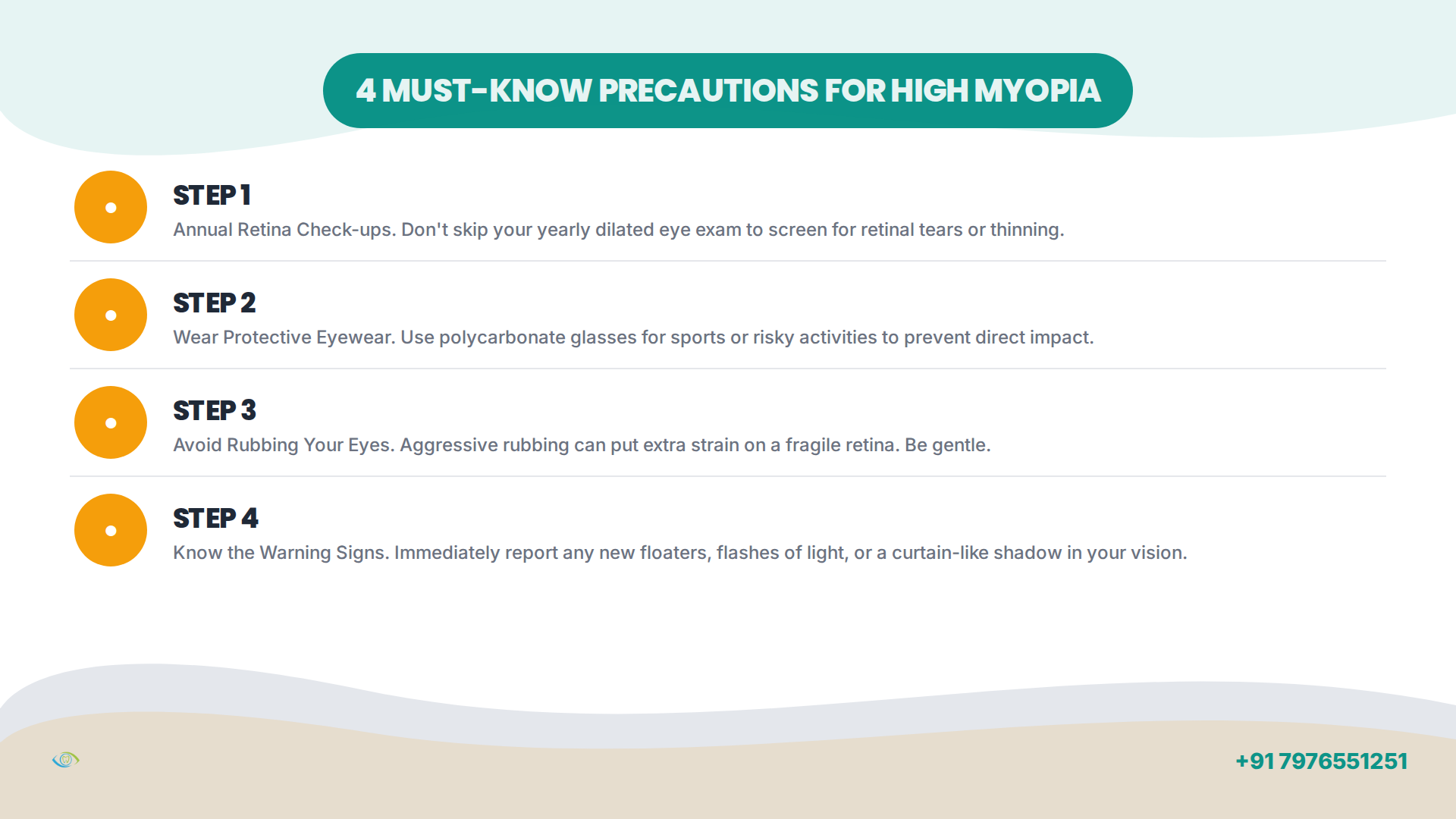
At Jaipur Eye & Dental Hospital, we counsel families with a history of high myopia to adopt four non-negotiable habits. These steps are simple, but they are the most effective defense against the severe complications associated with a highly myopic eye. Proactive monitoring and protection are key to managing the inherent risks.
How Often Should You Get Your Retina Checked?
For anyone with high myopia, a simple “glasses number” check-up once a year is not enough. You must undergo a comprehensive, dilated retinal examination annually. During this exam, an ophthalmologist uses special lenses to inspect the peripheral retina for any signs of thinning, lattices, or small holes. Detecting these issues early allows for preventive laser treatment (barrage laser) to seal the weak spots and prevent a full-blown detachment.
What Warning Signs Require Immediate Medical Attention?
You and your family must be educated on the symptoms of a retinal tear or detachment. If you suddenly experience a shower of new floaters (black dots), flashes of light (like a camera flash), or see a dark, curtain-like shadow creeping into your field of vision, do not wait. This is a medical emergency. Go to an eye hospital immediately, as prompt treatment is critical to saving your vision.