META: Seeing the world with a -20 power? High myopia isn’t just about thick glasses; it carries a >50% higher risk of retinal detachment. Learn the 4 essential precautions you must take.
High Myopia (-20): 4 Precautions You Must Know | Jaipur Eye & Dental Hospital
Having a very high spectacle number, like -20, is a condition known as high myopia. While glasses or contact lenses can correct the vision, the number itself is a sign of structural changes in the eye that require lifelong awareness and care. It’s not just about blurry vision; it’s about protecting your eyes from serious future risks.
What is High Myopia and Why is a -20 Power a Concern?
High myopia means your eyeball has grown longer than a typical eye. This stretching thins the retina, the light-sensitive layer at the back of the eye, making it more fragile. A prescription of -6 or higher is generally considered high myopia, so a -20 power indicates a very significant structural change. This thinning of the retina increases the lifetime risk of serious conditions like retinal tears, holes, and detachment, which can lead to permanent vision loss if not treated urgently.
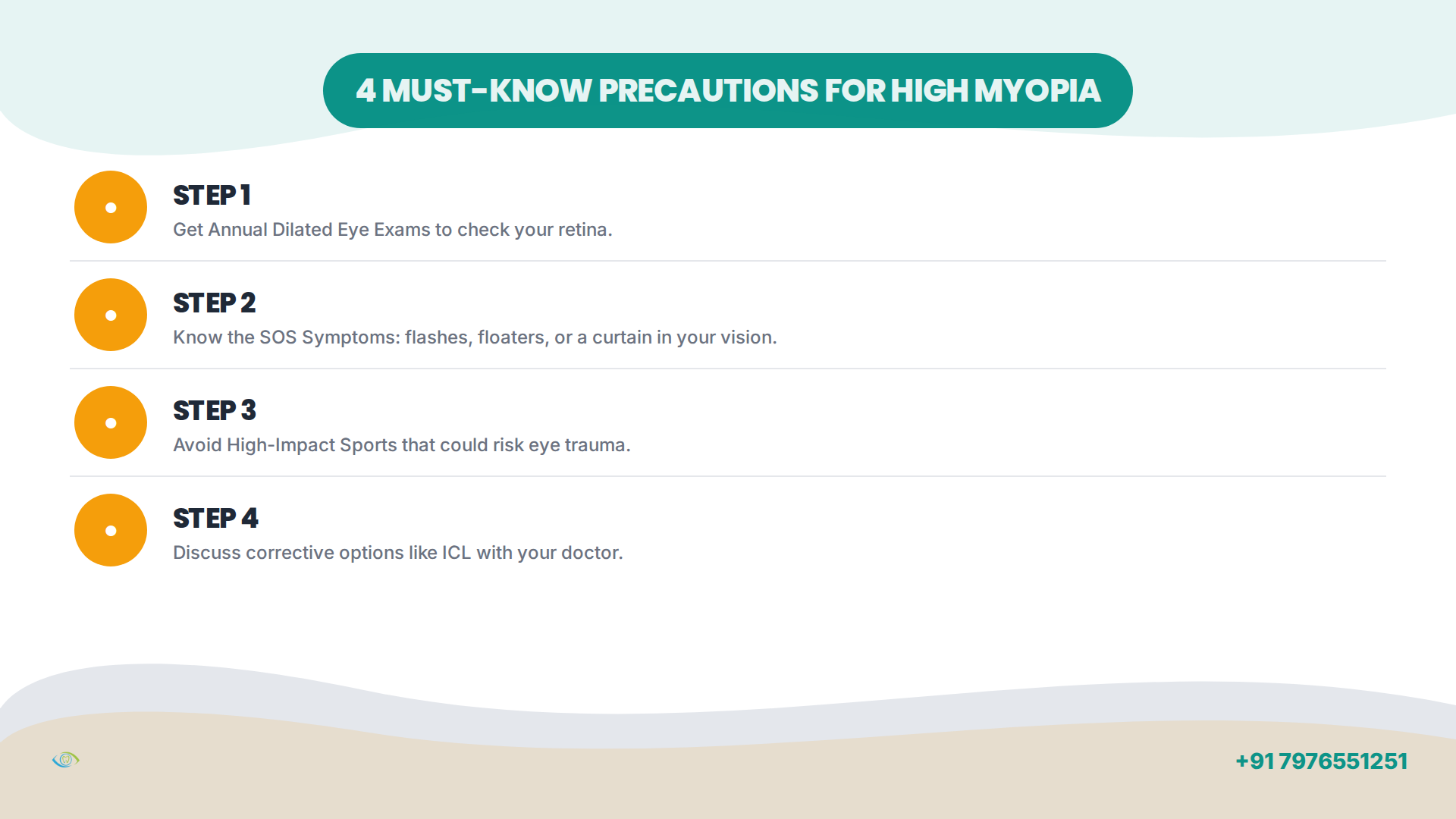
Precaution 1: Why Are Annual Dilated Eye Exams Non-Negotiable?
For someone with high myopia, an annual dilated eye exam is the single most important preventive measure. During this check-up, your ophthalmologist uses special drops to widen your pupils, allowing for a clear, comprehensive view of the entire retina. This helps detect any weak spots, tiny holes, or tears before they become a major problem. Finding these issues early allows for preventive laser treatment that can seal the weak areas and prevent a full retinal detachment, which is a much more serious emergency.
Precaution 2: What Are the Emergency “SOS” Symptoms to Watch For?
Because the risk of retinal detachment is always present, you must know the warning signs that require an immediate visit to an eye doctor. These are not subtle changes. The most common symptoms include a sudden increase in “floaters” (black spots or squiggly lines), seeing flashes of light (like a camera flash), or noticing a dark curtain or shadow moving across your field of vision. If you experience any of these, it’s an emergency. Do not wait to see if it gets better; go to an eye hospital immediately.
Precaution 3: Which Activities Should You Avoid?
While living a normal, active life is encouraged, it’s wise to avoid activities that involve a high risk of direct impact to the head or eyes. This includes contact sports like boxing or martial arts. A direct blow can cause the fragile retina to tear or detach. While activities like swimming or light jogging are perfectly safe, avoiding situations with a high probability of facial trauma is a simple and effective way to reduce your risk.