META: Did your glasses frame break? Learn why transferring old lenses to a new frame can cause eye strain and headaches, especially with progressive lenses. Discover the right steps to take.
It’s a frustrating moment we’ve all faced: a snap, a crack, and suddenly your spectacle frame is broken. Your first thought might be to save money by simply moving your old lenses into a new frame. While it seems like a clever fix, this common shortcut can seriously compromise your vision and eye health, especially if you wear progressive lenses.
Why Can’t You Just Swap Lenses to a New Frame?
Your spectacle lenses are not just simple pieces of glass. They are custom medical devices. When an optician creates your glasses, they measure the exact optical center of the lens and align it perfectly with the center of your pupil. This measurement, known as the pupillary distance (PD), ensures that you are looking through the correct part of the lens for the clearest vision. According to a 2018 study, even small misalignments can significantly reduce visual acuity.
Every spectacle frame has a unique size, shape, and curvature. When you force an old lens into a new frame, the optical center shifts. Your eyes then have to strain to compensate for this misalignment, which can lead to a host of problems.
What Are the Risks of Using Old Lenses in New Frames?
Ignoring the need for new, correctly-fitted lenses can do more than just feel “off.” The primary risk is developing asthenopia, or eye strain, which manifests as fatigue, discomfort around the eyes, and headaches. You might also experience blurred or distorted vision because you are no longer looking through the lens’s ideal focal point. For wearers of progressive lenses, the issue is even more severe. These lenses have multiple prescriptions in one lens (for distance, intermediate, and near vision), and the corridors for each are narrow. A slight shift renders these zones useless, making your expensive progressive lenses no better than a standard single-vision pair.
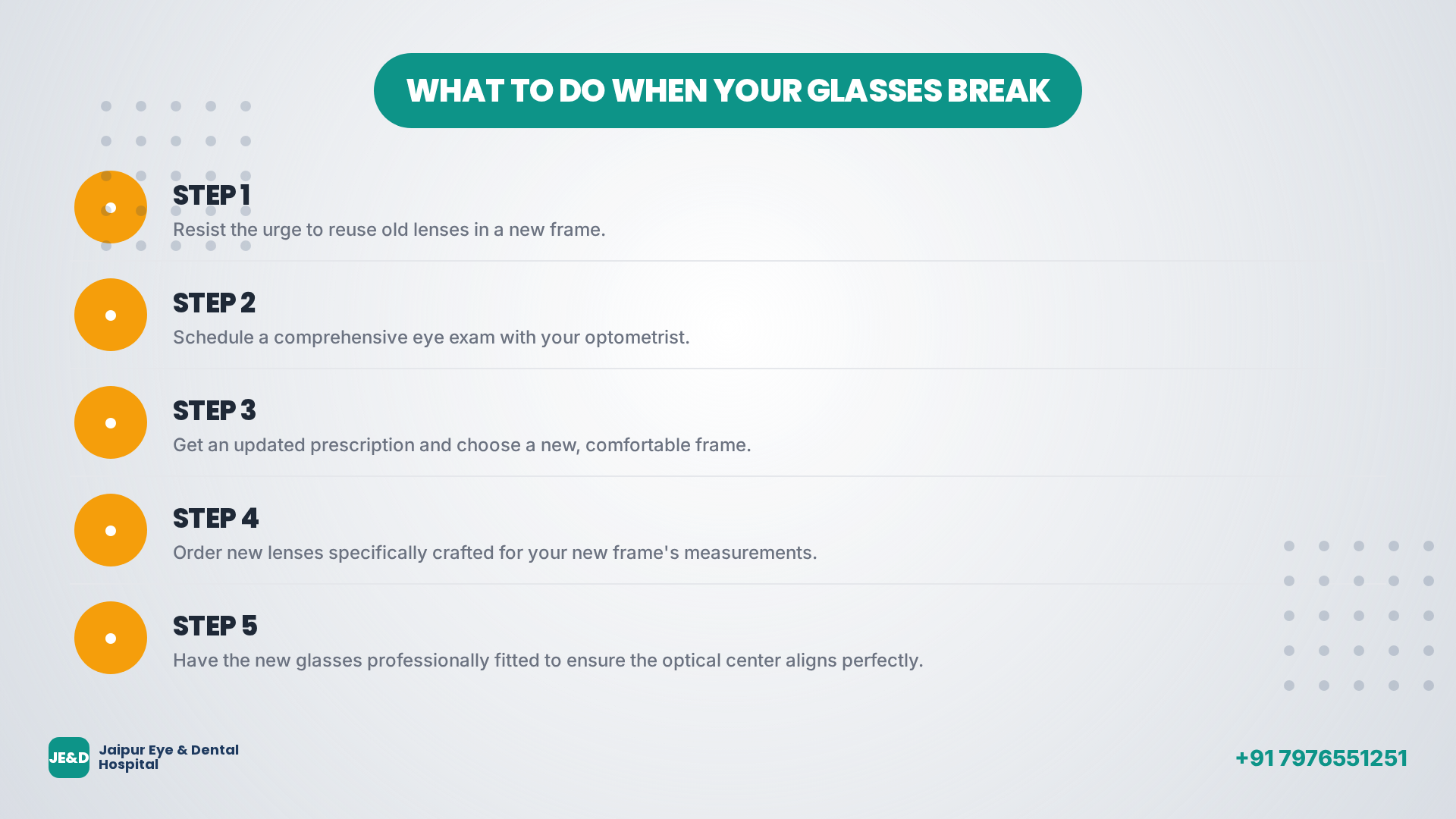
What’s the Correct Process When Your Frame Breaks?
When your frame breaks, it’s an opportunity to ensure your prescription is still optimal. The best course of action involves a few simple steps that prioritize your long-term eye health over a short-term fix. Instead of attempting a risky lens transfer, follow this professional guidance.