
META: Up to 35% of patients with 20/20 vision after cataract surgery still report dissatisfaction. Learn the 5 most common mistakes patients regret and how to avoid them.
Cataract surgery is one of the safest and most commonly performed procedures in the world. Yet we regularly see patients at our clinic who express regret — not because the surgery went wrong, but because of avoidable mistakes made before or after the procedure. Here’s what those mistakes are, and how you can sidestep them entirely.
Why Do Some Patients Regret Cataract Surgery?
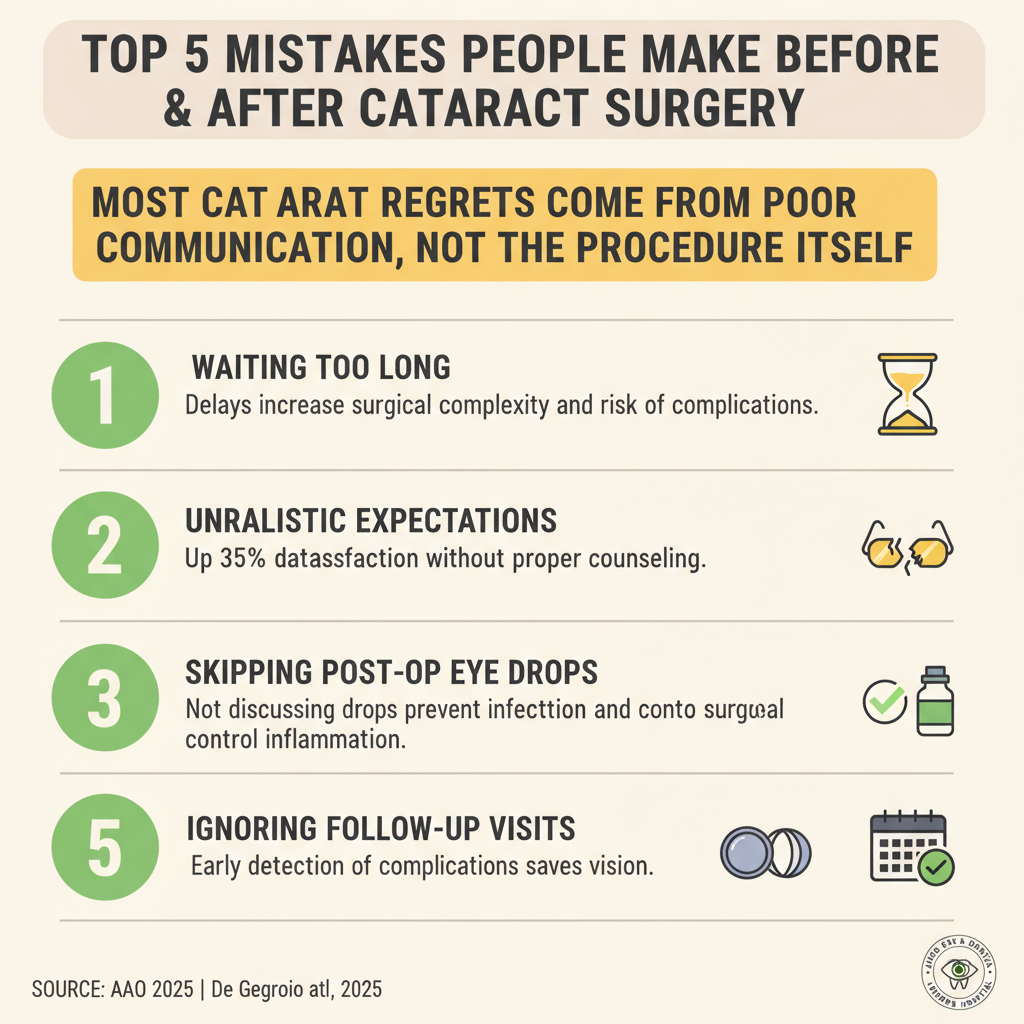
The regret usually has nothing to do with the surgeon’s skill or the technology used. Research published in 2025 found that even with a perfect 20/20 visual outcome, up to 35% of patients report dissatisfaction (De Gregorio et al., 2025). That’s a striking number for a procedure with a 98% success rate.
The dissatisfaction comes from three buckets: mismatched expectations, poor pre-operative communication, and sloppy post-operative care. The good news? Every single one of these is within your control.
Is Waiting Too Long for Cataract Surgery a Mistake?
Yes, and it’s the most common regret we hear. There’s a persistent myth that you should wait until cataracts “ripen” or become fully mature before getting surgery. That advice is outdated and potentially harmful.
A landmark NIH study showed that patients who waited more than 6 months for cataract surgery experienced significantly more vision loss and a reduced quality of life (Hodge et al., 2007). The longer you wait, the denser the cataract becomes. That means a more complex surgery, longer recovery, and higher complication risk.
At our clinic, we recommend getting evaluated as soon as you notice symptoms like blurred vision, difficulty driving at night, or colours appearing faded. Modern cataract surgery is effective at any stage. There’s no benefit to suffering through declining vision while waiting for the “right time.”
How Important Is Choosing the Right IOL?
Extremely important, and this is where many patients feel short-changed. The intraocular lens (IOL) that replaces your clouded natural lens determines how clearly you’ll see after surgery. Yet many patients don’t even know there are options.
There are three main types to discuss with your surgeon:
- Monofocal IOLs: Correct vision at one distance (usually far). You’ll likely need reading glasses. These are the most predictable and cost-effective option.
- Multifocal IOLs: Provide vision at multiple distances. Great for reducing dependency on glasses, but some patients experience glare or halos around lights at night.
- Toric IOLs: Designed for patients with astigmatism. They correct the corneal curvature issue alongside the cataract.
The regret comes when patients discover post-surgery that a different lens would have better matched their lifestyle. A software engineer who works on screens all day has different needs from a retired person who mostly drives and reads the newspaper. Research shows patient satisfaction scores differ meaningfully between monofocal and multifocal choices (Shah et al., 2015). Discuss your daily routine with your surgeon openly.
What Happens If You Skip Post-Op Eye Drops?
The prescribed eye drops after cataract surgery aren’t optional extras. They serve two critical functions: preventing infection and controlling inflammation. Skipping them or stopping early can lead to prolonged discomfort, delayed healing, and in rare cases, serious complications.
We’ve seen patients who felt fine after a few days and stopped their drops, only to return weeks later with inflamed eyes and hazy vision. The anti-inflammatory and antibiotic drops typically need to be used for 3-6 weeks as prescribed. Think of them as insurance for your surgical result.
Why Are Follow-Up Visits After Cataract Surgery Non-Negotiable?
Most surgeons schedule follow-up visits at 1 day, 1 week, and 1 month after the procedure. These aren’t courtesy check-ins. They’re essential for detecting silent complications that you might not notice yourself.
Elevated intraocular pressure, posterior capsule opacity (a secondary clouding that can develop months later), and subtle signs of infection can all be caught early during follow-ups and treated easily. Left unchecked, they can permanently affect your vision. The American Academy of Ophthalmology emphasises that timely follow-up care is as important as the surgery itself (AAO, 2023).
If you can’t make a scheduled visit, call your doctor to reschedule. Don’t simply skip it because your vision “feels fine.”
How Can You Set Realistic Expectations Before Surgery?
This is perhaps the single biggest factor in post-surgery satisfaction. Patients who expect “perfect” vision comparable to their 20-year-old self are setting themselves up for disappointment.
Cataract surgery restores clarity by removing the clouded lens. But it doesn’t fix unrelated eye conditions like glaucoma, macular degeneration, or diabetic retinopathy. If you have these conditions, your vision after surgery will still be limited by them. A thorough pre-operative evaluation should identify these issues and set realistic goals.
The most satisfied patients we see are those who asked detailed questions during their consultation. What will my near vision be like? Will I still need glasses? What are the realistic outcomes for someone with my eye health profile? Studies show that poor pre-operative communication is a leading cause of patient dissatisfaction (EyeWorld, 2022). Don’t leave the consultation until all your questions are answered.
Frequently Asked Questions
Is cataract surgery painful?
Most patients experience minimal discomfort. The procedure is done under topical anaesthesia (eye drops), and the surgery itself takes 10-15 minutes. Some mild scratchiness or grittiness for a day or two is normal, but significant pain is not. Contact your surgeon immediately if you experience sharp pain.
How long does full recovery take after cataract surgery?
Most patients notice improved vision within 1-3 days. However, complete visual stabilisation takes 4-6 weeks. During this time, your brain is adapting to the new lens, and any post-operative inflammation is resolving. Avoid strenuous activity and heavy lifting for at least 2 weeks.
Can cataracts come back after surgery?
The cataract itself cannot return because the natural lens is permanently removed. However, some patients develop posterior capsule opacity months or years later, which causes similar blurring symptoms. This is easily treated with a quick, painless laser procedure called YAG capsulotomy that takes just a few minutes.
What’s the right age to get cataract surgery?
There’s no fixed age. Cataract surgery is recommended when the condition starts interfering with your daily life — difficulty reading, driving, recognising faces, or doing your job. Most patients in India undergo the procedure between 55-70, but we’ve treated patients in their 40s and well into their 80s.