META: Considering teeth straightening? Invisalign offers a nearly invisible, removable option, while traditional braces are highly effective for complex cases. Learn the key differences in comfort, cost, and lifestyle.
Choosing between Invisalign and traditional braces is a common question for anyone looking to straighten their teeth. Both are excellent tools for achieving a perfect smile, but they work differently and fit different lifestyles. Understanding these differences is the first step toward making a confident decision for your dental health.
What Are the Main Differences: Invisalign vs. Braces?
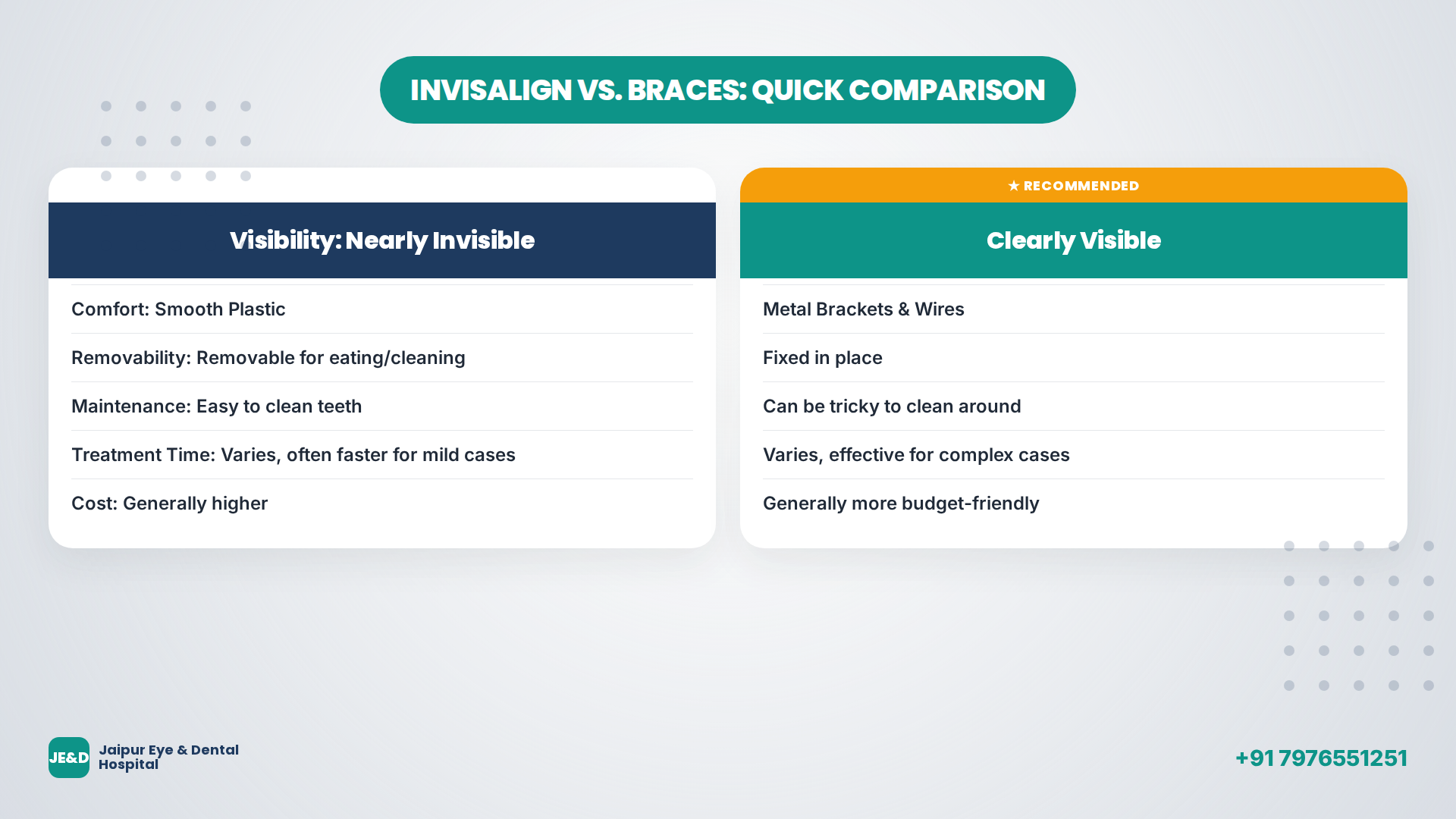
The most significant difference is that Invisalign uses a series of clear, custom-made plastic aligners to gently move your teeth, while traditional braces use metal brackets and wires. Because Invisalign aligners are nearly invisible, they are often preferred by adults and professionals. A 2021 study found that the demand for clear aligners has grown significantly, with over 1.5 million people starting treatment annually (American Association of Orthodontists, 2021).
Which Option Fits Your Lifestyle Better?
Your daily habits play a huge role in this decision. Invisalign aligners are removable, which means you can take them out to eat, drink, brush, and floss. This makes maintaining oral hygiene easier than with braces. However, this freedom requires discipline; you must wear the aligners for 20-22 hours a day for them to be effective. Braces are fixed, so you don’t have to worry about remembering to wear them, but you’ll need to be more careful with cleaning and avoid certain hard or sticky foods.