META: 3D visualization systems in eye surgery offer sharper views, lower light exposure, and better surgeon comfort. Learn how this technology replaces the traditional microscope.
Eye surgery has relied on the same tool for decades: the optical microscope. The surgeon bends forward, peers through tiny eyepieces, and operates under intense light for hours. But a new generation of 3D visualization systems is changing how these procedures are performed.
How Does 3D Visualization Work in Eye Surgery?
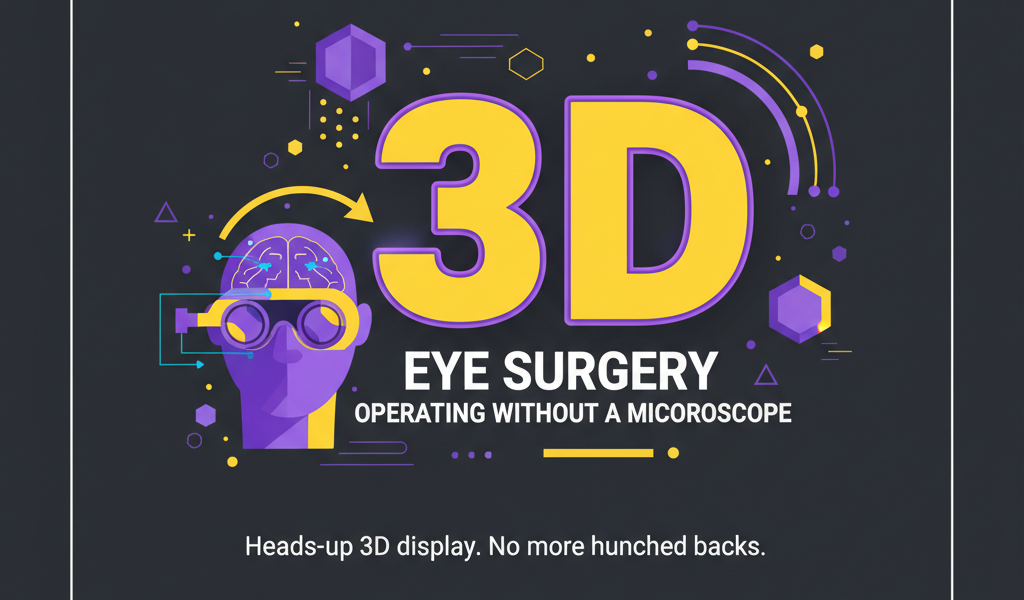
Instead of looking through a microscope eyepiece, the surgeon wears a polarized headset or views a large 3D monitor. A high-resolution camera captures the surgical field in real time and displays it with depth perception that matches or exceeds what a traditional microscope provides.
Think of it like the difference between watching a standard TV channel and a 3D movie. The surgical structures, vessels, and tissues appear layered and separated, giving the surgeon a more complete spatial understanding of what they’re working on ([Leica Microsystems, 2025](https://www.leica-microsystems.com/science-lab/medical/4-key-benefits-of-3d-digital-microscopy-in-ophthalmic-surgery/)).
Why Is It Better Than a Traditional Microscope?
Three advantages stand out for both surgeons and patients:
1. Sharper visualization. Digital zoom and image enhancement let the surgeon see finer details than optical magnification alone allows. Colors appear more accurate, and contrast can be adjusted in real time.
2. Lower light exposure. Traditional microscopes require high-intensity illumination, which carries a small but real risk of retinal phototoxicity. 3D systems need far less light to produce a bright, clear image ([Retina Today, 2022](https://retinatoday.com/articles/2022-apr/the-pros-and-cons-of-3d-visualization)).
3. Better surgeon comfort. The surgeon can sit upright with a neutral spine position instead of hunching over eyepieces. Longer procedures become less physically demanding, which directly supports precision and focus.
Is 3D Technology Safe for Patients?
Multiple studies have confirmed that 3D visualization systems produce surgical outcomes comparable to traditional microscopes. A 2023 study published in PMC found no significant difference in complication rates or visual recovery between the two approaches ([Giansanti et al., 2023](https://pmc.ncbi.nlm.nih.gov/articles/PMC10301265/)).
The technology is already in use at leading eye centres worldwide for cataract surgery, retinal procedures, and corneal transplants. At Jaipur Eye & Dental Hospital, we evaluate every new advancement carefully before adopting it, because patient safety always comes first.
Frequently Asked Questions
Does 3D eye surgery mean the surgeon isn’t looking directly at my eye?
The surgeon views a real-time camera feed of your eye on a 3D display. The image is live, magnified, and in high definition. The surgeon still sees every detail of the procedure as it happens, just through a screen instead of eyepieces.
Is 3D visualization more expensive for the patient?
The cost of surgery depends on the procedure itself, not the visualization tool used. At Jaipur Eye & Dental Hospital, we don’t charge extra based on which technology assists the surgeon. The focus is always on choosing the approach that gives the best outcome for your specific case.