Quick answer: High myopia — a glasses power above -6 diopters — stretches your retina and raises your risk of retinal detachment by as much as 10 times compared with people who have normal vision (American Academy of Ophthalmology). A dilated retina check every 6 months can catch tears, thinning, or holes early, before they threaten your sight. The exam takes about 10–15 minutes and most people feel little to no discomfort.
What is high myopia? Myopia is a refractive error in which the eyeball is longer than normal, so light focuses in front of the retina instead of on it and distant objects look blurry (National Eye Institute). High myopia is myopia beyond roughly -6 diopters — the point at which the over-stretched eye begins to put the retina at real risk.
If you wear glasses with a high minus number, your job doesn’t end at wearing glasses or contact lenses. This condition changes the structure of your eye, and that makes your retina vulnerable.
Why Does High Myopia Affect Your Retina?
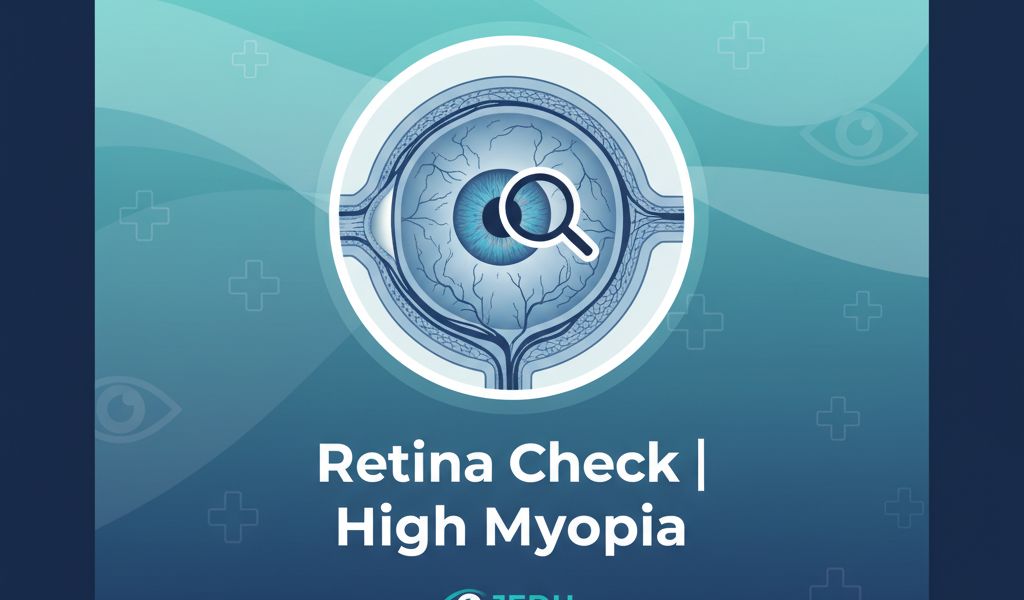
When you are highly myopic, your eyeball is longer than normal. This stretches the retina — the thin, light-sensitive layer at the back of the eye that works like the film in a camera. A stretched retina is more likely to develop thin spots, tears, or holes over time, which is why nearsightedness is a well-recognised risk factor for retinal detachment (American Academy of Ophthalmology).
Most people won’t feel any symptoms until the damage is advanced. That is why waiting for “something to feel wrong” is dangerous. By the time you notice flashes, floaters, or a curtain effect, you may already have a retinal detachment — a medical emergency.
What Happens During a Retina Check?
A retina check is quick and, for most people, comfortable. Your eye doctor will dilate your pupils with drops and examine the back of your eye using a special lens and light. The whole process takes about 10–15 minutes. Your near vision will stay blurry for 3–4 hours afterward, so arrange not to drive yourself home.
If your doctor spots a weak area, they may recommend laser treatment to seal it and lower the chance of detachment. Caught early, this is a simple outpatient procedure. Caught late, retinal detachment surgery is more complex and the outcome is harder to predict (National Eye Institute).
Protecting your eyes is a daily habit, not just a once-a-year visit — see our guide to protecting your vision in the digital age and why a tear-quality test matters when you spend hours on screens.
Frequently Asked Questions
How Often Should Someone With High Myopia Get Their Retina Checked?
If your prescription is over -6 diopters, you should have a dilated retina examination every 6 months. If you have already had retinal problems or have a family history of detachment, your doctor may recommend checks more often.
Warning Signs of a Retinal Problem
Watch for sudden flashes of light, a shower of new floaters (specks or cobwebs drifting across your vision), or a dark curtain moving across your field of view. These are emergencies — don’t wait for your next scheduled check, and don’t drive yourself. Early detection is everything, which is also where the future of eye care is heading.
Have questions about your retina health? Book a consultation: call +91 7976551251 or visit jaipureyedental.com.