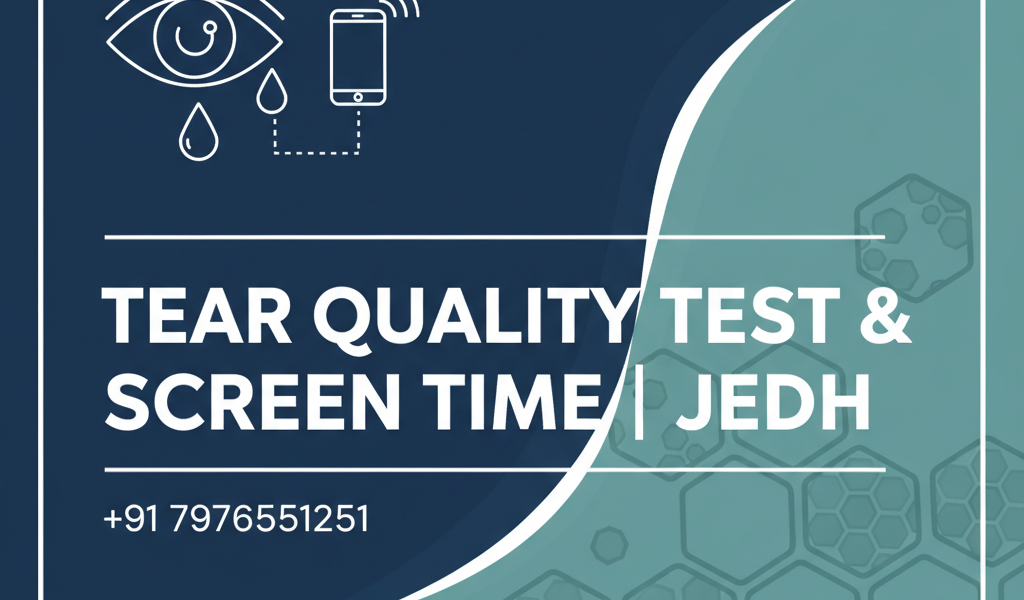
Most people don’t think about their tears until their eyes burn. But if you spend 6+ hours daily on screens, your tear quality may already be declining — even if you haven’t noticed symptoms yet.
Why Does Screen Time Damage Tear Quality?
When you focus on a screen, your blink rate drops from 15-20 times per minute to just 5-7 times (American Academy of Ophthalmology, 2023). This incomplete blinking means your tear film doesn’t spread evenly across your eye. Over time, this causes faster tear evaporation and poor tear quality — even if your eyes still produce enough tears.
The result? Your tears can’t lubricate your eyes properly. You may notice burning, grittiness, or blurry vision by late afternoon. These aren’t just “tired eyes” — they’re signs your tear film is breaking down faster than it should.
What Does a Tear Quality Test Show?
A tear quality test measures how stable your tear film is and how quickly it evaporates. The most common method is Tear Breakup Time (TBUT) — your doctor applies a harmless dye and measures how long your tear film holds together between blinks. Normal is 10+ seconds. Anything under 5 seconds suggests dry eye disease.
Some clinics also check tear osmolarity (salt concentration). Higher osmolarity means your tears are too concentrated — a key marker of dry eye severity. Both tests are non-invasive and take under 5 minutes total.
Call +91 7976551251 or visit
jaipureyedental.com